Digital SAT® Reading & Writing Hub
Improve Reading and Writing by separating passage logic from grammar rules: learn the domain, identify the clue, explain the wrong answer, and test the skill in timed practice. Use this hub to move from concept review into measurable verbal drills.
1. Introduction to Digital SAT Verbal
The Reading & Writing section of the Digital SAT represents a total departure from the traditional paper-and-pencil exam. Historically, students faced long, multi-paragraph reading passages followed by 10 to 11 questions, alongside separate grammar sections containing sentence editing and revision drills. Under the new digital format, the College Board has merged these two domains into a single unified testing experience.
The most significant structural change on the digital exam is the introduction of short, standalone passages. Each question features its own custom text, typically ranging from 25 to 150 words. While this reduces the cognitive fatigue of tracking a single narrative or academic argument across multiple pages, it introduces a new challenge: you must reset your focus, tone, and logical pacing with every single item. The test is adaptive, meaning your accuracy on the first module influences whether the second module has a higher- or lower-difficulty mix. Achieving a high score requires not only strong grammatical skills and reading comprehension, but also a strategic approach to time management.
2. Core Topic Clusters & Guides
Our curriculum is organized into eight specialized guide domains and one practice hub to ensure comprehensive coverage of the entire exam.

Information and Ideas
Master central ideas, text evidence, data tables, and logical graph interpretations. Learn to find direct textual support.
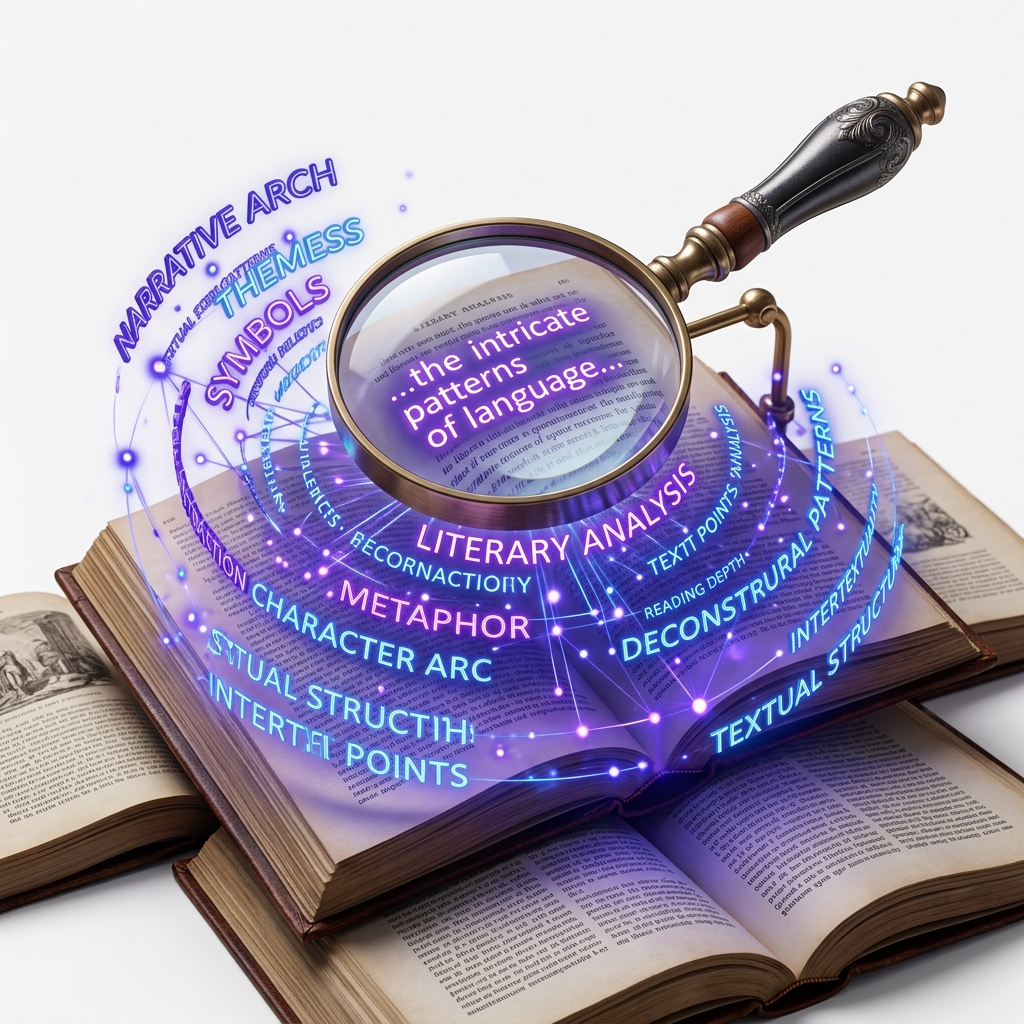
Craft and Structure
Master words in context, text structure, dual-passage comparisons, and character perspective analysis.

Expression of Ideas
Master rhetorical synthesis and transitions. Learn to structure bullet points and select logical transition words.

Standard English Conventions
Master standard grammar rules and sentence boundaries. Learn to use commas, semicolons, colons, and dashes correctly.
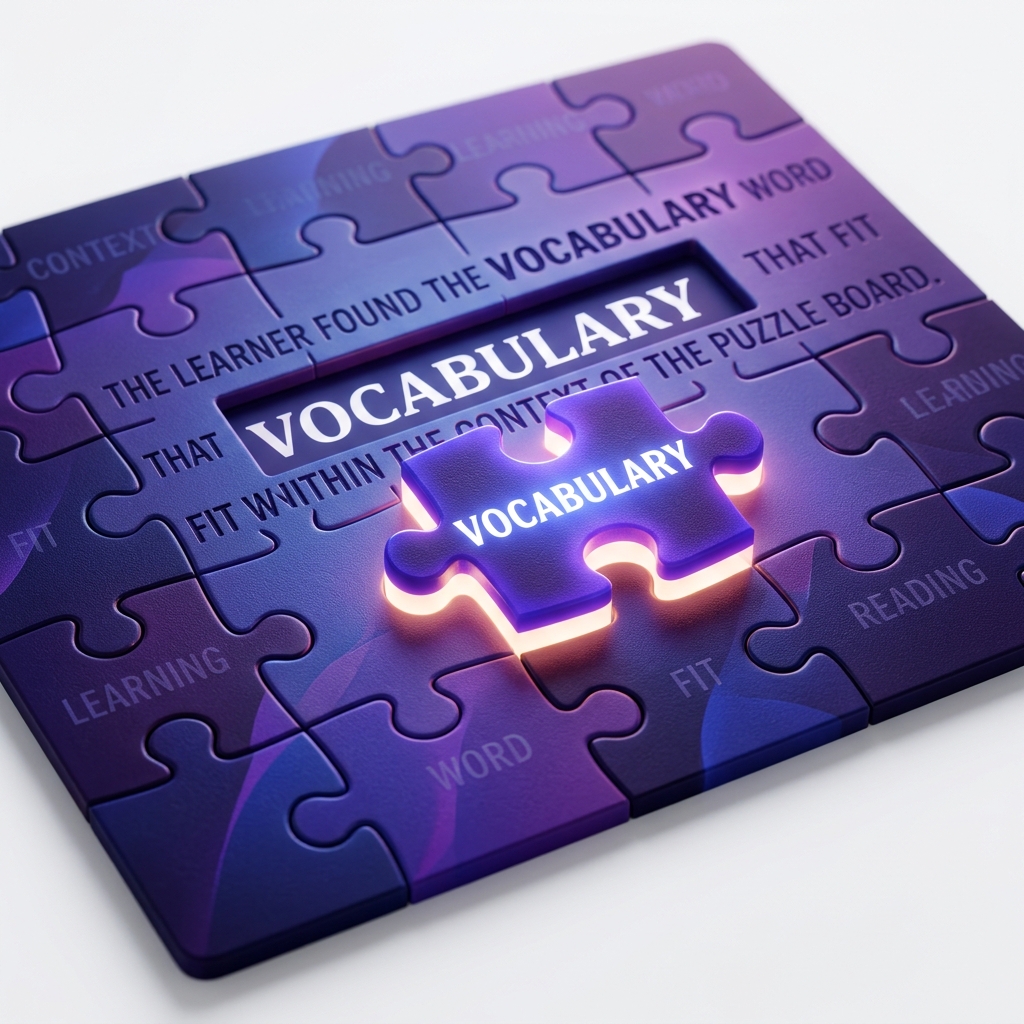
Vocabulary in Context
Learn the Prediction Method to solve vocabulary blanks. Avoid common sophistry distractors and contextual traps.
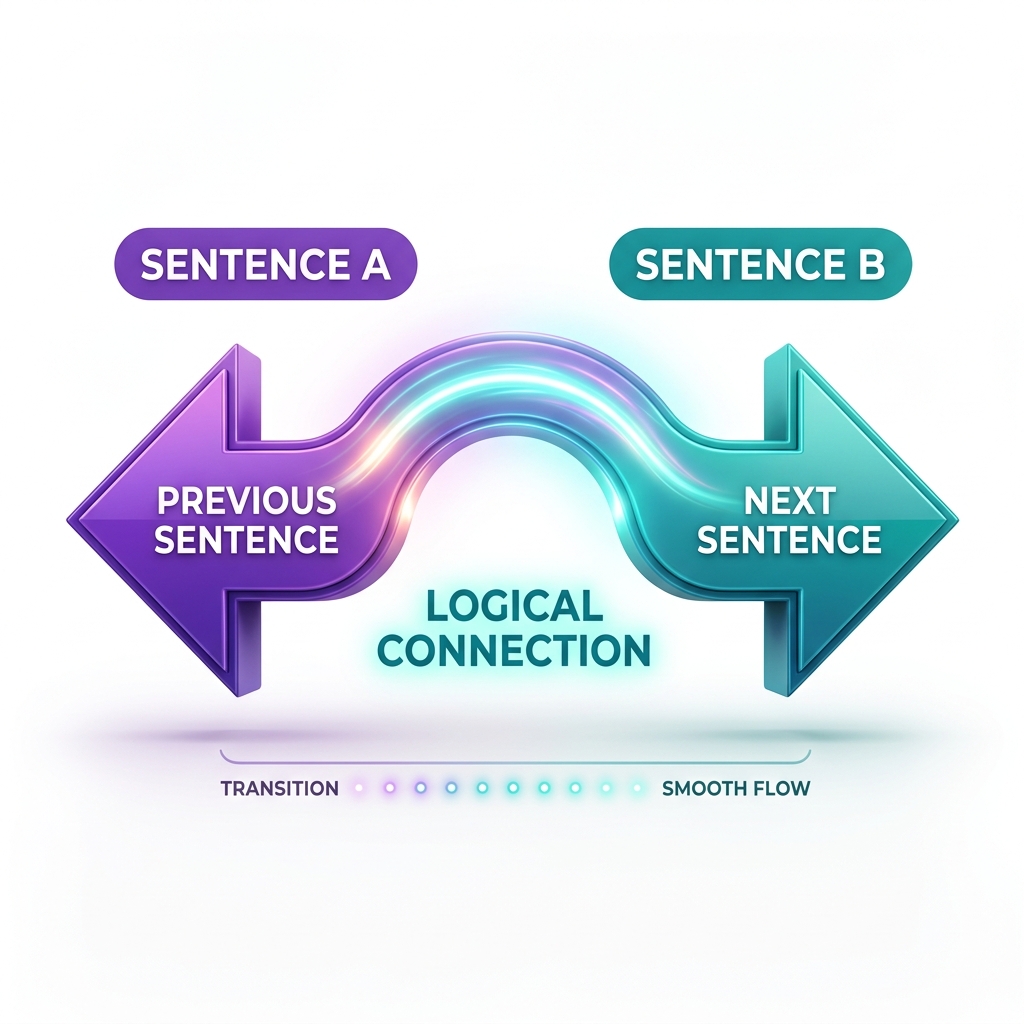
Transitions
Categorize transition words into Addition, Contrast, Cause-and-Effect, and Illustration to connect sentences logically.
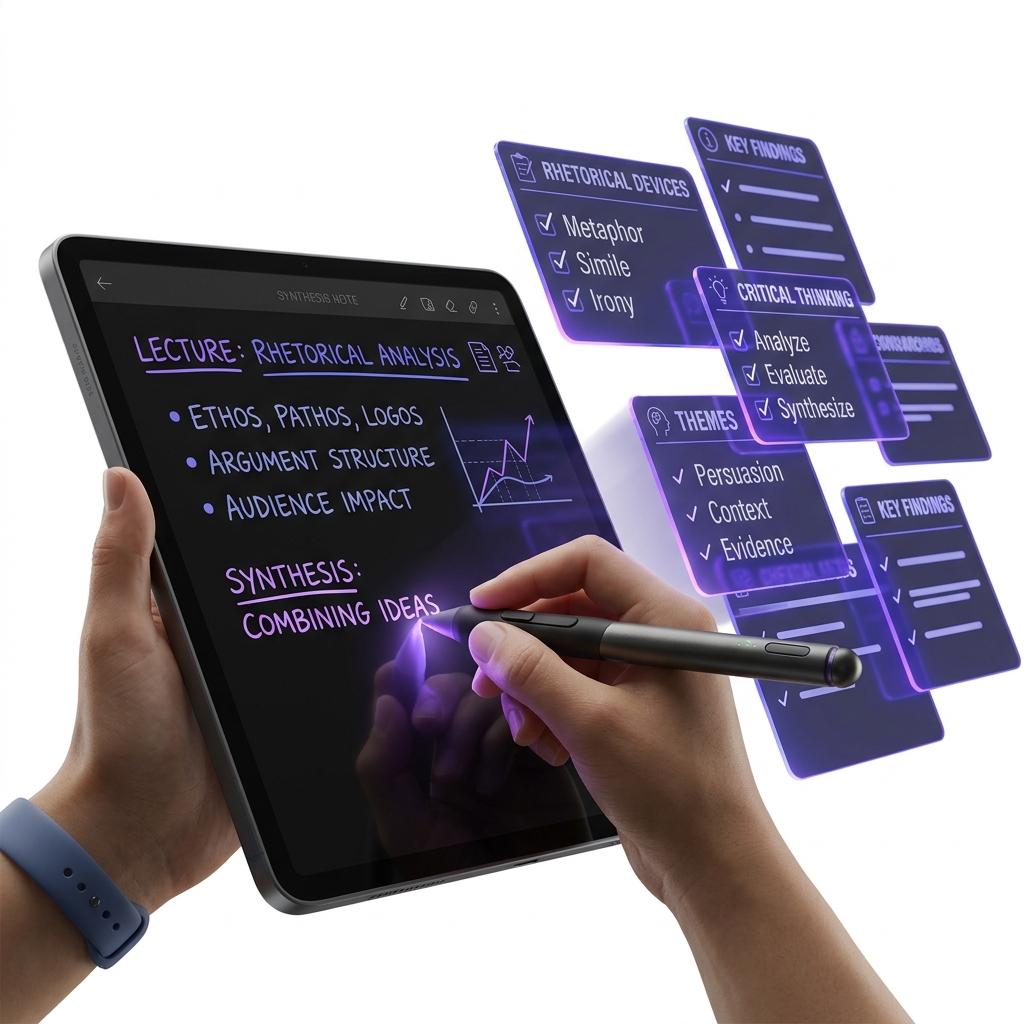
Rhetorical Synthesis
Apply the 3-Step Goal-Focus strategy to bullet-point prompts. Isolate instructions and eliminate distractors instantly.

Grammar Rules
Master subject-verb agreement, pronoun references, modifier placement, and parallel structures on the exam.
3. Section Timing & Pacing Mechanics
Time management is one of the most critical elements of a successful testing strategy on the Reading & Writing section. Many students lose points because they spend too much time reading and analyzing the early reading comprehension passages, leaving them with insufficient time to complete the grammar and transition questions at the end of the module.
Pacing Calculation
The Reading & Writing section provides a total of 64 minutes to solve 54 questions, split evenly into two modules. Let t_pace represent the average time available per question:
While 71 seconds seems like a generous amount of time for a single question, this average is deceptive. Long reading comprehension passages containing scientific details or historical arguments can easily consume 90 to 120 seconds of analysis. To compensate, you must learn to solve grammar (Standard English Conventions) and transition questions in 30 to 45 seconds. This allows you to \"bank\" valuable seconds for the more demanding reading items.
| Question Milestone | Elapsed Time | Remaining Time | Focus Area / Pacing Strategy |
|---|---|---|---|
| Question 7 | 10 minutes | 22 minutes | Solve early vocabulary and text structure questions. Maintain active reading focus. |
| Question 15 | 20 minutes | 12 minutes | Complete reading comprehension and command of evidence passages. Save time where possible. |
| Question 22 | 27 minutes | 5 minutes | Solve grammar and punctuation boundaries rapidly. Rules are absolute, so avoid overthinking. |
| Question 27 | 31 minutes | 1 minute | Final check of flagged items. Ensure no bubbles are left blank in the Bluebook interface. |
4. Recommended Score Pathways
Your study roadmap must target your current score tier. Select the pathway below that matches your goals:
Pathway 1: Foundation Booster (Target: 500+)
If your starting score is below 450, focus entirely on building a strong foundation in grammar conventions and transitions. These questions make up approximately 50% of the exam and are the easiest to master because they are governed by predictable, structural rules.
- Master independent and dependent clause boundaries. Eliminate all comma splices.
- Learn to distinguish between transition categories (Addition, Contrast, Cause-and-Effect).
- Study subject-verb agreement and singular indefinite pronouns.
- Practice basic grammar drills using our targeted sat reading and writing practice tools.
Pathway 2: Target 650+ Pathway
If you are scoring in the 500s, focus on passage comprehension, textual evidence, and the Prediction Method for vocabulary questions. Strong Module 1 accuracy improves your chance of seeing a harder second module, but College Board does not publish fixed public routing cutoffs.
- Learn the Prediction Method for Words in Context questions to bypass deceptive options.
- Master Command of Evidence questions by verifying that your chosen option directly supports the author's primary claim.
- Study colon, semicolon, and dash rules for sentence structures.
- Eliminate reading details that are not directly relevant to the question prompt.
Pathway 3: Target 800 (Elite Score Pathway)
If you are scoring above 650, aim for a perfect score by focusing on speed, complex dual-passages, literary texts, and subtle rhetorical synthesis goals.
- Practice active passage analysis of dense 19th-century scientific and historical literature.
- Master the 3-Step Goal-Focus strategy for Rhetorical Synthesis to solve bullet point items under 30 seconds.
- Review and eliminate subtle distractors (such as statements that are factually true but do not answer the prompt).
- Perform timed practice on full-length mock exams to build cognitive endurance.
5. Diagnosing Common Verbal Weaknesses
Many students struggle to improve their score because they prepare by passively reading passages rather than addressing their specific test-taking errors. Review these common weaknesses to see if they apply to you:
1. Over-Reading Passages and Wasting Time
Reading every passage slowly from beginning to end without checking the question first is a major pacing error. Instead, read the prompt first to identify the exact task, then scan the passage with a focused goal.
2. Comma Splices and Boundary Confusion
Students often use a single comma to connect two independent clauses, which creates a comma splice. Semicolons, colons, dashes, or commas with coordinating conjunctions are required to separate complete sentences.
3. Rote Vocabulary List Memorization
Memorizing long lists of obscure dictionary definitions is inefficient because the SAT tests how words shift meaning in specific contexts. Focus instead on analyzing context clues and transition indicators.
4. Prompt Mismatch in Rhetorical Synthesis
Choosing an answer choice that is factually true according to the bullet points, but does not address the prompt's specific instruction is a common error. Always check the instruction in the prompt first.
6. High-Fidelity Worked Examples
Review these step-by-step worked examples to master the core domains of the Reading & Writing section.
Example 1: Words in Context (Vocabulary)
Passage:
Although the employee's work was initially praised for its diligence, the manager later discovered that several files had been compiled with ______ care, leading to errors in the final quarterly review.
Question:
Which choice completes the text with the most logical and precise word?
- A) meticulous
- B) cursory
- C) gratuitous
- D) exemplary
Step-by-Step Solution using the Prediction Method:
1. Locate Context Clues: The transition word \"Although\" signals a contrast. The first part of the sentence praises the employee's \"diligence\" (thorough, careful work). The second part of the sentence must show the opposite. The clue \"leading to errors\" tells us that the files were compiled with a lack of care.
2. Predict a Word: A simple word that fits the blank is \"insufficient,\" \"careless,\" or \"hasty.\"
3. Evaluate Choices:
• A) meticulous: Means extremely careful and detailed. This is the opposite of our prediction and contradicts \"leading to errors.\"
• B) cursory: Means hasty and therefore not thorough or detailed. This matches our prediction perfectly.
• C) gratuitous: Means uncalled for or lacking good reason. This does not fit the context of the sentence.
• D) exemplary: Means serving as a desirable model; outstanding. This is a positive word and does not fit the contrast.
4. Conclusion: The correct choice is B.
Example 2: Punctuation Boundaries (Standard English Conventions)
Passage:
In 1912, Alfred Wegener proposed his theory of continental ______ he hypothesized that all the continents were once joined in a single supercontinent named Pangaea.
Question:
Which choice completes the text with the most logical punctuation?
- A) drift, and
- B) drift;
- C) drift,
- D) drift
Step-by-Step Solution:
1. Analyze Clause Boundaries: Examine the structure of the clauses before and after the blank.
• Clause 1: \"In 1912, Alfred Wegener proposed his theory of continental drift\" is an independent clause (contains a subject and a verb and can stand alone as a sentence).
• Clause 2: \"he hypothesized that all the continents were once joined in a single supercontinent named Pangaea\" is also an independent clause.
2. Identify Valid Connectors: To connect two independent clauses, we must use a semicolon, a colon, a dash, a period, or a comma accompanied by a coordinating conjunction (FANBOYS).
3. Evaluate Choices:
• A) drift, and: While a comma plus \"and\" (coordinating conjunction) is a valid connector, the conjunction \"and\" is unnecessary here because the second clause functions as an explanation or elaboration of the first, rather than an addition of separate facts.
• B) drift;: A semicolon is a valid connector to join two independent clauses without a conjunction. This fits perfectly.
• C) drift,: A comma alone between two independent clauses creates an ungrammatical comma splice. This is incorrect.
• D) drift: Having no punctuation between two independent clauses creates a run-on sentence. This is incorrect.
4. Conclusion: The correct choice is B.
Example 3: Transitions (Expression of Ideas)
Passage:
Many researchers believe that writing code is a purely logical and scientific process. ______, experienced programmers often compare software development to creative writing or musical composition, citing the necessity of elegant design and aesthetic rhythm.
Question:
Which choice completes the text with the most logical transition?
- A) Furthermore
- B) Consequently
- C) Conversely
- D) Specifically
Step-by-Step Solution:
1. Analyze the Sentences:
• Sentence 1: States that writing code is considered a \"logical and scientific process.\"
• Sentence 2: States that experienced programmers compare code to \"creative writing or musical composition\" (artistic and creative processes).
2. Identify the Logical Relationship: The relationship is one of contrast: logical/scientific vs. creative/artistic.
3. Evaluate Choices:
• A) Furthermore: Used to add information. This does not fit the contrast.
• B) Consequently: Used for cause-and-effect. Sentence 2 is not a result of Sentence 1.
• C) Conversely: Used to introduce a contrasting or opposite point. This matches the relationship perfectly.
• D) Specifically: Used to introduce a detailed example or clarification. This does not fit.
4. Conclusion: The correct choice is C.
Example 4: Rhetorical Synthesis (Expression of Ideas)
Bullet Points:
- The painter Georgia O'Keeffe was famous for her large-scale paintings of flowers.
- She painted \"Red Canna\" in 1924.
- \"Red Canna\" depicts the close-up petals of a red canna lily.
- The painting highlights the intense colors and organic forms of nature.
Question / Goal:
The student wants to introduce Georgia O'Keeffe's painting \"Red Canna\" and describe its main subject. Which choice most effectively uses information from the given notes to accomplish this goal?
- A) Georgia O'Keeffe, who painted \"Red Canna\" in 1924, was famous for painting large-scale flowers.
- B) Painted in 1924, Georgia O'Keeffe's large-scale artwork \"Red Canna\" depicts the close-up petals of a red canna lily.
- C) \"Red Canna\" was painted by Georgia O'Keeffe to highlight the intense colors and organic forms of nature.
- D) Georgia O'Keeffe painted close-up flowers like \"Red Canna\" in 1924 to highlight organic forms.
Step-by-Step Solution:
1. Identify the Specific Goal: The prompt requires us to do two things:
• Introduce the painting \"Red Canna\".
• Describe its main subject (the close-up petals of a red canna lily).
2. Evaluate Choices against the Goal:
• A) Introduces the painting and O'Keeffe's style, but does not describe the specific subject of \"Red Canna\" itself.
• B) Introduces the painting (\"Red Canna\") and describes its subject (\"depicts the close-up petals of a red canna lily\"). This satisfies both parts of the goal.
• C) Introduces the painting, but describes its thematic focus (intense colors and organic forms) rather than its concrete subject (the lily petals).
• D) Mentions close-up flowers and the painting name, but does not state the specific subject of the painting.
3. Conclusion: The correct choice is B.
7. Verbal Adaptivity & IRT Scoring Mechanics
Your final score on the Reading & Writing section is not determined by simply counting the number of correct responses. Instead, the College Board uses a psychometric scoring framework called Item Response Theory (IRT). This framework calculates your verbal ability level, represented by the parameter \theta, based on the statistical properties of the questions you answer correctly.
Under the standard three-parameter logistic (3PL) IRT model, each question has three parameters: difficulty b, discrimination a, and guessing c. The probability P(\theta) of a student with verbal ability \theta answering a question correctly is represented by the formula:
In this model, the difficulty parameter b shifts the probability curve along the ability scale. The discrimination parameter a defines the slope of the curve, showing how effectively the question separates high-ability students from low-ability students. Finally, the guessing parameter c represents the lower limit of the curve, indicating the probability of answering the question correctly by random guessing. Because different questions carry different weights under this model, your final scaled score (on the 200–800 section scale) depends on the specific questions you answer correctly.
The adaptive routing system is a direct application of this theory. Module 1 contains a representative mix of easy, medium, and hard questions. Your performance on Module 1 determines whether you receive an easier or harder Module 2. A lower-difficulty second module contains fewer high-difficulty items, while a harder second module gives the scoring model stronger evidence for higher verbal ability. College Board does not publish a fixed public routing cutoff or score cap.
8. Frequently Asked Questions
What is the structure and timing of the Digital SAT Reading & Writing section?
The Reading & Writing section is split into two back-to-back testing modules. Each module contains 27 questions and lasts 32 minutes, giving you a total of 54 questions in 64 minutes. This includes 4 unscored pretest questions (2 per module) that do not affect your final score. Unlike the old paper test which had long reading passages with multiple questions, the digital test features short passages of 25 to 150 words, each with exactly one question. The questions are grouped by topic domain, starting with Craft & Structure, followed by Information & Ideas, then Standard English Conventions, and ending with Expression of Ideas.
How does the adaptive system route me between Reading & Writing modules?
The Reading & Writing section uses a two-stage adaptive model. Module 1 contains a broad mix of easy, medium, and hard questions. Your performance on Module 1 determines whether you receive an easier or harder Module 2. A harder second module gives the scoring model more high-difficulty evidence, but College Board does not publish a fixed public score cap or routing cutoff.
What is the best strategy for solving 'Words in Context' vocabulary questions?
For vocabulary questions, use the Prediction Method instead of reading the answer choices first. Read the passage and identify the transition words and context clues. Predict your own simple word that fits the blank perfectly. Then, look at the answer choices and find the word that is closest in meaning to your prediction. This prevents you from getting distracted by choices that sound sophisticated but do not fit the context of the sentence.
What grammatical punctuation rules are tested on the Digital SAT?
The SAT tests standard English conventions, with a heavy emphasis on boundary punctuation. You must understand how to link independent and dependent clauses. A semicolon is used to link two independent clauses without a conjunction. A colon is used to introduce a list, explanation, or definition, and must be preceded by a complete independent clause. A single dash can set off a parenthetical explanation at the end of a sentence, while a pair of dashes functions like parentheses to set off non-essential clauses in the middle.
How can I distinguish between the different types of Transitions?
Transitions fall into four main categories: Addition/Similarity (furthermore, in addition, likewise), Contrast (however, conversely, nevertheless), Cause-and-Effect (therefore, consequently, thus), and Illustration/Sequence (for example, specifically, subsequently). Before choosing a transition, read the sentence before the blank and the sentence after the blank. Determine the logical relationship between them: are they adding information, showing an opposite outcome, showing a cause, or giving a specific example? Then pick the transition that matches that relationship.
What is the 3-Step Goal-Focus strategy for Rhetorical Synthesis questions?
Rhetorical Synthesis questions present a list of bullet points containing information about a topic and ask you to select a sentence that accomplishes a specific goal. Do not read all the bullet points first. Instead: 1) Read the prompt first to identify the specific goal (e.g., 'introduce the study's findings' or 'contrast two theories'). 2) Eliminate any answer choices that do not achieve this goal. 3) Verify that the remaining choices are factually supported by the bullet points. This goal-first strategy saves significant time.
How does the SAT test subject-verb and pronoun-antecedent agreement?
The SAT tries to distract you by placing long prepositional phrases or non-essential clauses between the subject and the verb (or the pronoun and its antecedent). To find the correct agreement, mentally cross out all modifying phrases between the subject and verb to identify the true, simple subject. Remember that collective nouns (like committee, class, or group) and singular indefinite pronouns (like everyone, each, or someone) are singular and require singular verbs and pronouns (like 'its' instead of 'their').
Can I take the Reading & Writing section completely untimed?
No. The official Digital SAT is strictly timed. However, when practicing on our simulator, you can toggle between timed and untimed modes to build confidence. When practicing untimed, focus entirely on applying correct strategies—like predicting vocabulary, analyzing clause boundaries, and verifying rhetorical goals. Once your accuracy is high, switch to timed mode to build your speed under test-day pacing constraints.
How should I manage my time during the 32-minute modules?
The average time per question is approximately 71 seconds. However, you should not spend 71 seconds on every question. You can solve grammar and transition questions in 30 to 45 seconds, which allows you to bank time for longer reading comprehension and command of evidence passages that may take 90 to 120 seconds. If you get stuck on a difficult reading passage, flag it, choose a temporary guess, and return to it at the end of the module if time permits.
Disclaimer: SAT® is a trademark registered by the College Board, which is not affiliated with, and does not endorse, this website. All practice questions, sample passages, grammar explanations, and study guides are written independently by our academic staff to aid student preparation.