Digital SAT Reading: Transitions Strategy Guide
Master SAT transition questions by classifying contrast, addition, cause, concession, sequence, and example relationships.
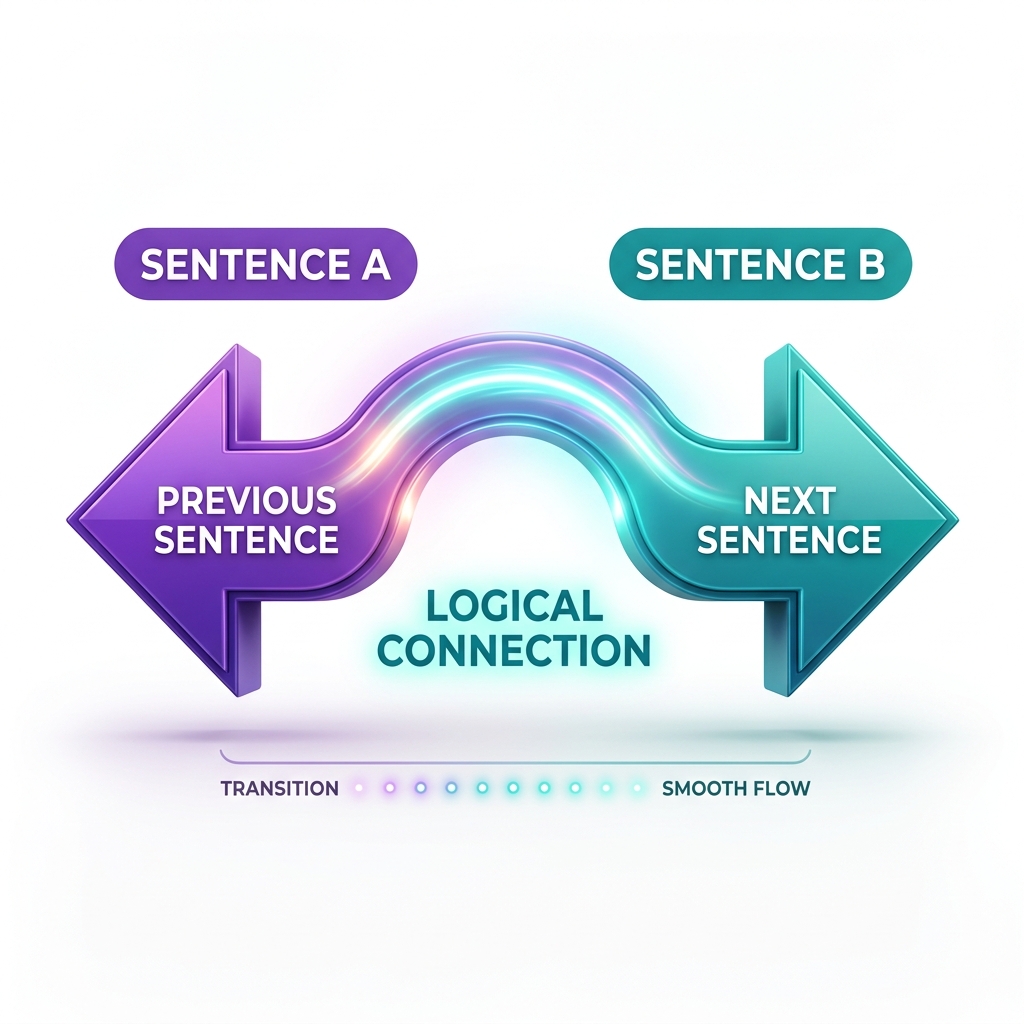
Introduction to SAT Transitions
Transitions are one of the most predictable and high-yield question types on the Digital SAT Reading and Writing section. Classified under the Expression of Ideas domain, transition questions represent approximately \(10%\) to \(15%\) of the Reading and Writing section. Across your two test modules, you will encounter \(4\) to \(6\) transition items in total.
These questions are always grouped together in the latter half of each module, following the Standard English Conventions (grammar) questions. Because these questions rely on a set of highly structured logical rules and a finite list of transition words, they are highly trainable. With the right strategy, you can solve these questions with absolute mathematical certainty, often in under \(30\) to \(40\) seconds, allowing you to bank valuable time for the more time-consuming reading comprehension and double-passage questions.
Transition questions assess your ability to recognize the logical relationship between two ideas. The SAT presents a short text (typically \(2\) to \(4\) sentences) with a blank at the beginning or middle of a sentence. Your task is to select the word or phrase that represents the most logical connection.
A common mistake is reading the sentence with each choice inserted to see which one “sounds best.” This is a dangerous habit. SAT-style transition distractors can sound sophisticated and grammatically correct even when they do not match the logical relationship. To master these questions, you must learn to analyze the logical direction of the text and apply systematic elimination strategies.
This guide will teach you the core categories of transition words, the step-by-step prediction method, the rules of transition punctuation, and the specific traps used by test-makers.
The Core Strategy: The Three-Step Method
To solve transition questions accurately and efficiently, you must bypass your “ear” and use a structured, analytical process:
[Read & Bracket Blank] ──> [Identify Logical Relationship] ──> [Match & Eliminate (POE)]Step 1: Read the passage without looking at the choices, and bracket the transition area.
Read the passage to understand the core arguments. Pay close attention to the sentence before the blank (Sentence 1) and the sentence containing the blank (Sentence 2). Treat the transition word as a variable \(x\) that you must solve for. Do not look at the answer choices yet.
Step 2: Identify the logical relationship between the two sentences.
Analyze how Sentence 2 relates to Sentence 1. Ask yourself:
- Does Sentence 2 go in the same direction as Sentence 1, adding information or illustrating a point?
- Does Sentence 2 go in a different direction, contrasting with or restricting Sentence 1?
- Does Sentence 2 show the result or cause of Sentence 1?
- Does Sentence 2 show a sequence of events?
Write down or mentally declare a simple relationship word (e.g., “but,” “so,” “and,” “for example”).
Step 3: Match your prediction to the choices and use Process of Elimination (POE).
Scan the answer choices for the word that matches the logical category of your prediction. If multiple options seem possible, evaluate their specific definitions and apply the Synonymous Elimination rule.
The Synonymous Elimination Rule
This is the single most powerful shortcut for SAT transition questions. The exam is structured so that there can only be one correct answer. If two answer choices belong to the exact same logical category and perform the same rhetorical function, they are synonyms.
Because both words do the same job, neither can be the correct answer. Therefore, you can instantly eliminate both options.
For example, look at this common scenario:
- A) Furthermore
- B) Consequently
- C) Moreover
- D) Conversely
Furthermore and Moreover are both addition transitions. They add supporting information to an argument. Because they do the exact same job, selecting A would make C equally valid, and vice versa. Since there cannot be two correct answers, you can instantly cross out both A and C. This leaves you with only B (Consequently - cause/effect) and D (Conversely - contrast), transforming a four-choice question into a \(50%\) guess before you even read the passage.
The Nine Logical Transition Categories
The SAT tests nine main categories of transitions. You must memorize these categories and the specific words associated with them:
                  ┌───────────────┐
                  │  Transitions  │
                  └───────┬───────┘
     ┌────────────────────┼────────────────────┐
┌────┴────┐          ┌────┴────┐          ┌────┴────┐
│  Same   │          │ Different│         │ Cause/  │
│Direction│          │Direction│         │ Effect  │
└────┬────┘          └────┬────┘          └────┬────┘
     ├─ Addition          ├─ Contrast          └─ Result
     ├─ Example           └─ Concession
     ├─ Sequence
     ├─ Similarity
     ├─ Emphasis
     └─ Conclusion
1. Contrast (\(\neq\))
Signals that the second idea contradicts, restricts, or differs from the first.
- Transition Words: however, nevertheless, nonetheless, conversely, on the contrary, in contrast, instead, alternatively, still.
- When to use: Use when Sentence 2 highlights a difference, a limitation, or an opposing viewpoint to Sentence 1.
- Example: “Many botanists believed that the orchid species was extinct in the region. However, a research team recently discovered a small population blooming in a remote valley.”
2. Cause and Effect (\(\rightarrow\))
Signals that the second idea is a direct consequence, result, or explanation of the first.
- Transition Words: therefore, thus, consequently, as a result, accordingly, hence, subsequently (sometimes), thereby.
- When to use: Use when Sentence 1 describes a cause, action, or state, and Sentence 2 describes the inevitable outcome or logical result.
- Example: “The glacier melted at an unprecedented rate during the summer months. Consequently, the downstream river levels rose by over \(2\) meters, causing localized flooding.”
3. Addition (\(+\))
Introduces a new, separate supporting point that goes in the same direction as the previous argument.
- Transition Words: furthermore, moreover, in addition, additionally, besides, what is more.
- When to use: Use when you are listing multiple reasons, arguments, or pieces of evidence that support the same thesis, without narrowing the focus.
- Example: “The new public transit system reduced city-wide carbon emissions. Furthermore, it decreased average commute times for suburban residents by \(15%\).“
4. Illustration / Example
Narrows the focus from a broad claim in Sentence 1 to a specific instance, case study, or detail in Sentence 2.
- Transition Words: for example, for instance, specifically, to illustrate, in particular.
- When to use: Use when Sentence 2 provides a concrete example that proves or defines the general statement made in Sentence 1.
- Example: “The author’s early novels frequently draw upon her childhood experiences in rural Maine. For instance, her debut work features a protagonist growing up in a coastal logging town.”
5. Sequence / Chronology
Establishes a temporal or step-by-step order of events.
- Transition Words: subsequently, previously, thereafter, meanwhile, next, finally, then.
- When to use: Use when Sentence 2 describes an action that happens after, before, or at the same time as the action in Sentence 1.
- Example: “The archeologists carefully excavated the pottery shards from the site. Subsequently, they transported the artifacts to the laboratory for carbon dating.”
6. Concession
Acknowledges a counterargument or a limiting factor, but maintains the validity of the primary argument.
- Transition Words: granted, admittedly, even so, still, nevertheless, regardless, of course.
- When to use: Use when Sentence 2 introduces a fact that seems to oppose Sentence 1, but does not completely invalidate it.
- Example: “The team’s software update solved the database lag issues. Admittedly, it introduced a minor bug in the user profile page, which will be patched next week.”
7. Conclusion / Summary
Summarizes the preceding arguments or states the final takeaway.
- Transition Words: ultimately, in conclusion, in short, in sum, altogether, on the whole.
- When to use: Use when Sentence 2 represents a final synthesis or overarching point of a multi-sentence argument.
- Example: “The researchers analyzed various soil samples, climate patterns, and crop yields. Ultimately, they concluded that sustainable crop rotation is the most effective method for soil preservation.”
8. Similarity
Compares two distinct but analogous situations, showing that what is true for one is also true for the other.
- Transition Words: similarly, likewise, in the same way, by the same token.
- When to use: Use when Sentence 2 describes a different subject that behaves in a manner similar to the subject in Sentence 1.
- Example: “The introduction of non-native trout disrupted the aquatic food web in the northern lake. Similarly, the introduction of invasive carp led to a decline in native vegetation in the river basin.”
9. Emphasis / Intensification
Strengthens or highlights the truth of the preceding statement, often by adding a surprising or clarifying detail.
- Transition Words: indeed, in fact, actually, moreover (sometimes).
- When to use: Use when Sentence 2 reinforces the claims of Sentence 1 by adding emphasis or showing that the reality is even more pronounced.
- Example: “The new policy was expected to face significant opposition from the local community. In fact, over \(80%\) of the residents voted in favor of the proposal during the town hall meeting.”
Detailed Transition Reference Table
| Category | Logical Relationship | Common Words | Example Sentence |
|---|---|---|---|
| Contrast | Divergence or contradiction | however, conversely, on the contrary, instead, in contrast | The team expected a loss; however, they won the championship. |
| Concession | Acknowledging limitations | granted, admittedly, even so, still, nevertheless | The movie was very long. Even so, the audience remained engaged. |
| Cause/Effect | Result or consequence | therefore, thus, consequently, as a result, accordingly | The experiment failed twice; therefore, the scientists revised the protocol. |
| Addition | Extra supporting points | furthermore, moreover, in addition, additionally | The park protects local wildlife. Additionally, it provides hiking trails. |
| Illustration | Specific example | for example, for instance, specifically, in particular | Marine mammals have unique adaptations. Specifically, sea otters use tools. |
| Sequence | Chronological order | subsequently, previously, thereafter, next, finally | She collected the data. Subsequently, she began the statistical analysis. |
| Similarity | Parallel comparison | similarly, likewise, in the same way | High interest rates slow home sales. Likewise, they reduce business investments. |
| Emphasis | Intensifying a point | indeed, in fact, actually | The artist’s work is highly regarded. Indeed, it has won multiple awards. |
| Conclusion | Overall synthesis | ultimately, in conclusion, on the whole, in short | The project faced delays, budget cuts, and staffing issues. Ultimately, it succeeded. |
Punctuation Rules for Transitions
On the SAT, transition questions are not just about logic; they are also about grammar. Understanding how transitions are punctuated will help you eliminate choices that make sense logically but violate standard punctuation rules.
1. Semicolon and Comma (Joining Independent Clauses)
When a transition adverb connects two independent clauses (complete sentences) within a single sentence, it must be preceded by a semicolon and followed by a comma.
- Formula:
Independent clause; transition, independent clause. - Correct: “The data was corrupted during the transfer; therefore, the analysis had to be restarted.”
- Incorrect: “The data was corrupted during the transfer, therefore, the analysis had to be restarted.” (This is a comma splice.)
- Incorrect: “The data was corrupted during the transfer; therefore the analysis had to be restarted.” (Missing comma after the transition.)
2. Period and Comma (Separating Sentences)
If the transition starts a new sentence, it must be capitalized, preceded by a period, and followed by a comma.
- Formula:
Sentence one. Transition, sentence two. - Correct: “The botanical gardens are open year-round. However, the greenhouse is closed on Mondays.”
3. Parenthetical Commas (Inside a Clause)
If a transition is placed in the middle of an independent clause as a parenthetical interruption, it must be set off by commas on both sides.
- Formula:
Subject, transition, verb... - Correct: “The research team, however, disagreed with the final conclusions of the study.”
4. Transition Adverbs vs. Subordinating Conjunctions
This is a critical distinction that the SAT tests frequently.
- Transition Adverbs (however, therefore, furthermore, nevertheless) connect ideas but do not make clauses dependent. They require a semicolon or a period when separating independent clauses.
- Subordinating Conjunctions (although, because, while, since, though) make a clause dependent. They do not take a comma after them and are used to link a dependent clause to an independent clause.
- Correct: “Although the temperatures were freezing, the team continued their field research.” (No comma after although.)
- Incorrect: “Although, the temperatures were freezing, the team continued their field research.”
- Correct: “The temperatures were freezing. Nevertheless, the team continued their field research.” (Comma after nevertheless.)
Common Trap Types
The College Board uses several distinct distractor styles to confuse students. Recognizing these traps will prevent you from choosing incorrect options:
1. The Comma Splice Trap
This trap offers a transition that fits perfectly from a logical standpoint, but is punctuated with a comma before it, joining two independent clauses.
- Example: “The software developers identified the server issue, however, they were unable to resolve it immediately.”
- Analysis: However is a transition adverb, not a conjunction. Placing commas on both sides of however when it sits between two independent clauses creates a comma splice. The sentence must be split with a period or semicolon.
2. The “Almost Synonyms” Trap
This trap presents two choices that seem very similar, but have slightly different logical roles. The most common is Furthermore vs. Specifically.
- Furthermore adds a new, independent point.
- Specifically defines, explains, or illustrates the previous point.
- Tip: Read the second sentence. If it answers the question “What is a specific example of the first sentence?”, choose Specifically or For instance. If it adds a brand-new reason, choose Furthermore.
3. The “Double Contrast” Trap
Using two contrast markers in the same sentence is redundant.
- Incorrect: “Although the vaccine was highly effective, but it had minor side effects.”
- Analysis: You must use Although or but, never both. The SAT will sometimes put transitions in the blank that create this type of grammatical redundancy.
4. The “Style Clashing” Trap
This occurs when the transition is too informal or colloquial for the academic tone of the SAT.
- Avoid: Besides (when used as ‘anyway’), On top of that, As a side note, By the way.
- Prefer: Furthermore, In addition, Additionally, Indeed.
10 Worked Examples with Explanations
Here are ten original, highly realistic Digital SAT worked examples. Study the passage analysis and option breakdowns to understand how to apply the strategy.
Worked Example 1
While conducting research on the migration patterns of monarch butterflies, entomologist Dr. Alvarez noted that population counts had declined significantly in northern habitats. ______ conservation efforts in Mexico had successfully preserved key winter nesting forests, suggesting that the species might recover if breeding grounds are protected.
- A) Consequently,
- B) However,
- C) In addition,
- D) Subsequently,
Explanation
- Analyze the Passage: The first sentence states that butterfly populations have declined in northern habitats (negative news). The second sentence states that conservation efforts in Mexico have successfully preserved nesting forests, hinting at a potential recovery (positive news).
- Identify the Relationship: The relationship between a decline in northern habitats and successful preservation in Mexico is one of contrast or qualification. We need a contrast transition.
- Evaluate the Choices:
- A) Consequently: Incorrect. This is a cause/effect transition. The preservation in Mexico is not a result of the decline in northern habitats.
- B) However: Correct. This contrast transition logically connects the negative decline to the positive conservation success.
- C) In addition: Incorrect. This is an addition transition, which does not capture the contrast between decline and success.
- D) Subsequently: Incorrect. This is a sequence transition, implying chronological order.
- Correct Answer: B
Worked Example 2
In the \(19\text{th}\) century, artists like J.M.W. Turner began experimenting with dramatic lighting and loose brushstrokes to capture atmospheric conditions rather than precise details. ______ French Impressionists like Claude Monet would later cite Turner’s expressive seascapes as a primary influence on their own revolutionary approach to painting.
- A) On the contrary,
- B) Indeed,
- C) Alternatively,
- D) Regardless,
Explanation
- Analyze the Passage: Sentence 1 explains that Turner experimented with loose brushstrokes to capture atmospheric conditions. Sentence 2 states that French Impressionists like Monet later cited Turner as a primary influence on their painting.
- Identify the Relationship: The second sentence reinforces and expands upon the importance of Turner’s work described in the first. It shows that his experiments were highly influential. This is an emphasis or intensification relationship.
- Evaluate the Choices:
- A) On the contrary: Incorrect. This is a contrast transition. The second sentence supports the first; it does not contradict it.
- B) Indeed: Correct. This emphasis transition fits perfectly, highlighting the impact of Turner’s techniques on subsequent art movements.
- C) Alternatively: Incorrect. This is a contrast/choice transition, which does not fit here.
- D) Regardless: Incorrect. This is a concession transition, implying that the second sentence happens despite the first.
- Correct Answer: B
Worked Example 3
To test the hypothesis that soil bacteria can degrade microplastics, the research team incubated polyethylene samples with Pseudomonas strains for sixty days. ______ the researchers observed a significant reduction in plastic mass and detected chemical markers indicating polymer oxidation.
- A) For example,
- B) Rather,
- C) Accordingly,
- D) Still,
Explanation
- Analyze the Passage: Sentence 1 describes an experimental setup: incubating microplastics with specific bacteria to see if they degrade. Sentence 2 describes the experimental results: a reduction in plastic mass and signs of chemical breakdown.
- Identify the Relationship: The results in Sentence 2 are a direct consequence of the setup in Sentence 1. We need a cause/effect or result transition.
- Evaluate the Choices:
- A) For example: Incorrect. Sentence 2 is not a specific example of the setup; it is the outcome.
- B) Rather: Incorrect. This is a contrast transition, implying an alternative.
- C) Accordingly: Correct. This cause/effect transition fits perfectly, showing that the results followed logically from the experiment.
- D) Still: Incorrect. This is a concession transition, which is inappropriate here.
- Correct Answer: C
Worked Example 4
The architectural firm designed the new community center to be fully carbon-neutral, incorporating solar panel grids and geothermal heating systems. ______ the building features a rainwater collection system designed to supply water for the community garden.
- A) In fact,
- B) Specifically,
- C) Furthermore,
- D) Even so,
Explanation
- Analyze the Passage: Sentence 1 states the building is carbon-neutral, featuring solar panels and geothermal heating. Sentence 2 adds that the building features a rainwater collection system for a community garden.
- Identify the Relationship: Both sentences list environmental features of the new community center. The rainwater system is a separate, additional feature that supports the overall eco-friendly design. We need an addition transition.
- Evaluate the Choices:
- A) In fact: Incorrect. This is an emphasis transition. The second sentence is not an intensification of the first; it is a separate feature.
- B) Specifically: Incorrect. Rainwater collection is not a specific detail of carbon-neutral heating or solar grids. It is a separate environmental initiative.
- C) Furthermore: Correct. This addition transition logically links the two distinct features of the building.
- D) Even so: Incorrect. This is a concession transition.
- Correct Answer: C
Worked Example 5
Many classical music critics argued that the composer’s late symphonies were overly chaotic and lacked structural coherence. ______ modern musicologists have analyzed these works using digital modeling, revealing a complex mathematical structure that underlies the apparent disorder.
- A) Consequently,
- B) Similarly,
- C) Meanwhile,
- D) Conversely,
Explanation
- Analyze the Passage: Sentence 1 describes a past view: critics found the composer’s symphonies chaotic and incoherent. Sentence 2 describes a modern view: musicologists found a complex mathematical structure beneath the chaos.
- Identify the Relationship: The modern view directly contradicts the historical view of the critics. We need a contrast transition.
- Evaluate the Choices:
- A) Consequently: Incorrect. The discovery of structure is not a result of the critics’ complaints.
- B) Similarly: Incorrect. The two sentences represent opposing views, not similar ones.
- C) Meanwhile: Incorrect. This implies simultaneous events, which is incorrect given the historical shift.
- D) Conversely: Correct. This contrast transition captures the shift from historical criticism to modern appreciation.
- Correct Answer: D
Worked Example 6
In the field of material science, developing self-healing polymers requires balancing mechanical strength with molecular mobility. If the polymer chains are bound too tightly, they cannot move to repair damage; ______ if they are too mobile, the material will lack structural integrity.
- A) in short,
- B) on the other hand,
- C) for instance,
- D) therefore,
Explanation
- Analyze the Passage: The sentence describes a delicate balance. If chains are too tight, they cannot heal (Scenario 1). The next clause describes the opposite scenario: if they are too mobile, the material lacks integrity (Scenario 2).
- Identify the Relationship: The two scenarios represent opposite extremes of a balance. We need a contrast transition.
- Evaluate the Choices:
- A) in short: Incorrect. This is a summary transition.
- B) on the other hand: Correct. This contrast transition connects the two opposing sides of the chemical balance.
- C) for instance: Incorrect. This is an illustration transition.
- D) therefore: Incorrect. The second scenario is not a result of the first; it is an alternative problem.
- Correct Answer: B
Worked Example 7
The initial prototype of the Mars rover struggled to navigate sandy terrain during laboratory trials, frequently becoming stuck in deep drifts. ______ the engineering team redesigned the wheel tread pattern, significantly increasing the rover’s surface traction.
- A) Granted,
- B) In contrast,
- C) As a result,
- D) Moreover,
Explanation
- Analyze the Passage: Sentence 1 describes a problem: the rover got stuck in sand. Sentence 2 describes the solution: the team redesigned the wheel treads to increase traction.
- Identify the Relationship: The redesign in Sentence 2 is a direct reaction to or consequence of the navigation failure in Sentence 1. We need a cause/effect or result transition.
- Evaluate the Choices:
- A) Granted: Incorrect. This is a concession transition.
- B) In contrast: Incorrect. This is a contrast transition.
- C) As a result: Correct. This cause/effect transition shows that the team redesigned the wheels because of the navigation issues.
- D) Moreover: Incorrect. This is an addition transition.
- Correct Answer: C
Worked Example 8
The digital preservation project has successfully scanned over two million historical documents, making them accessible to researchers worldwide. ______ some scholars warn that digital files are vulnerable to format obsolescence, urging archives to maintain physical backups of rare manuscripts.
- A) For example,
- B) Indeed,
- C) Still,
- D) Therefore,
Explanation
- Analyze the Passage: Sentence 1 describes a successful initiative: scanning historical documents for global access. Sentence 2 describes a warning: scholars warn that digital files are vulnerable, so physical backups are still needed.
- Identify the Relationship: The warning in Sentence 2 qualifies or limits the optimism of the success in Sentence 1. We need a concession or contrast transition that acknowledges the success but points out a remaining concern.
- Evaluate the Choices:
- A) For example: Incorrect. Sentence 2 is not a specific example of the scanning success.
- B) Indeed: Incorrect. This is an emphasis transition, which would reinforce the positive news without introducing the warning.
- C) Still: Correct. This concession transition logically links the two sentences, indicating that despite the scanning success, warnings still persist.
- D) Therefore: Incorrect. The warning is not a result of the scanning success.
- Correct Answer: C
Worked Example 9
To study the impact of sleep deprivation on cognitive performance, the psychologists monitored participants’ reaction times over a forty-eight hour period. ______ they evaluated the participants’ short-term memory recall by conducting word-association tests at regular intervals.
- A) Likewise,
- B) In addition,
- C) Alternatively,
- D) Specifically,
Explanation
- Analyze the Passage: Sentence 1 states that researchers monitored reaction times. Sentence 2 states that they also evaluated short-term memory recall.
- Identify the Relationship: Both sentences describe different parts of the psychologists’ research methodology. The memory evaluation is an additional, separate test conducted alongside the reaction time monitoring. We need an addition transition.
- Evaluate the Choices:
- A) Likewise: Incorrect. Likewise is a similarity transition, used when comparing two distinct subjects doing similar things. Here, the subject (the psychologists) is the same, and they are performing an additional task.
- B) In addition: Correct. This addition transition logically connects the two distinct tests conducted during the study.
- C) Alternatively: Incorrect. This is a contrast transition.
- D) Specifically: Incorrect. The memory test is not a specific example of monitoring reaction times. They are separate cognitive measures.
- Correct Answer: B
Worked Example 10
Volcanic eruptions can release massive quantities of sulfur dioxide into the stratosphere, where it reacts with water vapor to form highly reflective aerosol clouds. ______ these aerosols reflect incoming solar radiation back into space, leading to a temporary cooling of the Earth’s surface.
- A) Subsequently,
- B) On the other hand,
- C) In fact,
- D) In other words,
Explanation
- Analyze the Passage: Sentence 1 describes how eruptions release sulfur dioxide, which reacts to form aerosol clouds in the stratosphere. Sentence 2 explains that these aerosols reflect solar radiation, causing cooling.
- Identify the Relationship: Sentence 2 describes what happens after the aerosols are formed in the stratosphere. This is a chronological sequence or chronological consequence. We need a sequence transition.
- Evaluate the Choices:
- A) Subsequently: Correct. This sequence transition logically shows that the reflection and cooling happen after the aerosols are created.
- B) On the other hand: Incorrect. This is a contrast transition.
- C) In fact: Incorrect. This is an emphasis transition.
- D) In other words: Incorrect. Sentence 2 is not a restatement of Sentence 1; it describes a subsequent physical reaction.
- Correct Answer: A
10-Question Practice Drill
Apply the strategies you have learned to solve these ten original practice questions. Detailed explanations follow the drill.
Question 1
Although many architectural historians associate the Gothic revival style exclusively with public institutions and cathedrals, it was also widely adapted for residential housing. ______ home builders in the late \(19\text{th}\) century frequently added decorative lancet windows and pointed arches to modest suburban cottages.
- A) Rather,
- B) For instance,
- C) Still,
- D) Consequently,
Question 2
The transition from fossil fuels to renewable energy sources requires significant upgrades to existing electrical grids. Modern grids must be redesigned to handle the intermittent nature of solar and wind power. ______ utility companies must invest in large-scale battery storage facilities to ensure a continuous power supply during low-generation periods.
- A) On the contrary,
- B) By the same token,
- C) Accordingly,
- D) Instead,
Question 3
Biologists studying the evolutionary history of the tuatara—a reptile endemic to New Zealand—initially classified it as a lizard due to its physical appearance. ______ genomic sequencing revealed that the tuatara belongs to a distinct evolutionary lineage that split from lizards and snakes over \(250\) million years ago.
- A) Furthermore,
- B) In contrast,
- C) In fact,
- D) However,
Question 4
To reduce water consumption in agricultural regions, soil scientists recommend applying biochar to crop fields. Biochar increases the soil’s water-holding capacity, allowing plants to survive longer periods without irrigation. ______ this carbon-rich material traps essential nutrients in the topsoil, preventing them from leaching into local waterways.
- A) For example,
- B) Alternatively,
- C) Moreover,
- D) Ultimately,
Question 5
In the early days of cinema, silent films relied heavily on live piano accompaniment to establish mood and clarify narrative developments. ______ theater organists used custom sound-effect tabs to simulate steam whistles, thunderclaps, and horse hooves, enhancing the audience’s sensory immersion.
- A) Similarly,
- B) Therefore,
- C) Conversely,
- D) Subsequently,
Question 6
Many economic analysts predicted that the sudden rise in remote work would lead to a permanent collapse in commercial real estate values in major urban centers. ______ while commercial vacancies did increase, many developers successfully repurposed empty office towers into residential apartments, stabilizing the local property market.
- A) Indeed,
- B) Specifically,
- C) However,
- D) Therefore,
Question 7
To determine if a historic painting was created by the master or an assistant, conservators use infrared reflectography to view the underdrawings beneath the paint layers. ______ they analyze microscopic paint cross-sections to identify the chemical composition of the pigments used.
- A) Granted,
- B) Additionally,
- C) Rather,
- D) In short,
Question 8
During the Devonian period, the evolution of deep root systems by early land plants accelerated rock weathering processes, drawing massive amounts of carbon dioxide out of the atmosphere. ______ global carbon dioxide levels fell by nearly \(90%\), triggering a prolonged ice age that contributed to a mass extinction event.
- A) Instead,
- B) Admittedly,
- C) Consequently,
- D) On the other hand,
Question 9
Some literary scholars argue that translation is an act of creative recreation, meaning that a translated poem is a new artwork distinct from the original text. ______ others maintain that a translator’s primary duty is absolute fidelity to the author’s original words and syntax, minimizing creative interventions.
- A) By contrast,
- B) In fact,
- C) Therefore,
- D) Likewise,
Question 10
The design of the new library wing incorporates massive floor-to-ceiling windows to maximize natural daylighting. ______ the architects placed deep horizontal louvers above the glass panels to block the high summer sun, preventing excessive heat gain and glare.
- A) For instance,
- B) On the other hand,
- C) To mitigate this,
- D) In addition,
Practice Drill Explanations
Question 1 Explanation
- Passage Analysis: Sentence 1 states that the Gothic revival style was adapted for residential housing (general claim). Sentence 2 describes how home builders added Gothic features (lancet windows, pointed arches) to suburban cottages (specific example).
- Logical Relationship: Sentence 2 is a specific illustration of the general claim in Sentence 1. We need an illustration/example transition.
- Option Breakdown:
- A) Rather: Incorrect. This is a contrast transition.
- B) For instance: Correct. This transition correctly connects the general claim to the specific residential example.
- C) Still: Incorrect. This is a concession transition.
- D) Consequently: Incorrect. This is a cause/effect transition.
- Correct Answer: B
Question 2 Explanation
- Passage Analysis: Sentence 1 and 2 establish a problem: grid upgrades are needed because solar and wind power are intermittent. Sentence 3 describes the solution: utility companies must invest in battery storage facilities.
- Logical Relationship: The need to invest in battery storage is a direct consequence of the intermittent nature of renewable energy. We need a cause/effect or result transition.
- Option Breakdown:
- A) On the contrary: Incorrect. This is a contrast transition.
- B) By the same token: Incorrect. This is a similarity transition, used when comparing two distinct scenarios.
- C) Accordingly: Correct. This cause/effect transition shows that companies must invest in batteries as a result of the grid demands.
- D) Instead: Incorrect. This is a contrast transition.
- Correct Answer: C
Question 3 Explanation
- Passage Analysis: Sentence 1 states that biologists initially classified the tuatara as a lizard due to its appearance (past belief). Sentence 2 states that genomic sequencing revealed it belongs to a completely distinct lineage (new reality).
- Logical Relationship: The new genomic reality contradicts the initial classification. We need a contrast transition.
- Option Breakdown:
- A) Furthermore: Incorrect. This is an addition transition.
- B) In contrast: Incorrect. While it shows contrast, in contrast is used to compare two distinct subjects (e.g., “Frogs lay eggs in water. In contrast, desert toads…”). Here, we are contrasting a past belief with a current fact about the same subject. However is the standard adverb for qualifying a previous claim.
- C) In fact: Incorrect. This is an emphasis transition.
- D) However: Correct. This contrast transition logically connects the initial classification with the subsequent correction.
- Correct Answer: D
Question 4 Explanation
- Passage Analysis: Sentence 1 and 2 explain that biochar increases soil water-holding capacity (Benefit 1). Sentence 3 states that biochar also traps nutrients in the topsoil (Benefit 2).
- Logical Relationship: Benefit 2 is an additional advantage of biochar, separate from water retention. We need an addition transition.
- Option Breakdown:
- A) For example: Incorrect. Nutrient trapping is not a specific example of water-holding capacity.
- B) Alternatively: Incorrect. This is a contrast transition.
- C) Moreover: Correct. This addition transition logically links the two distinct benefits of biochar.
- D) Ultimately: Incorrect. This is a conclusion transition.
- Correct Answer: C
Question 5 Explanation
- Passage Analysis: Sentence 1 states that silent films relied on live piano accompaniment to establish mood. Sentence 2 states that theater organists used custom sound-effect tabs to simulate steam whistles and thunderclaps.
- Logical Relationship: Both sentences describe how different musicians (pianists and organists) used their instruments to enhance early films. They represent parallel, similar historical situations. We need a similarity transition.
- Option Breakdown:
- A) Similarly: Correct. This transition correctly connects the analogous roles of pianists and organists.
- B) Therefore: Incorrect. The organists’ actions were not caused by the pianists’ actions.
- C) Conversely: Incorrect. The two points do not contradict each other; they describe similar practices.
- D) Subsequently: Incorrect. This implies a sequential order, but these practices occurred concurrently.
- Correct Answer: A
Question 6 Explanation
- Passage Analysis: Sentence 1 states that analysts predicted a permanent collapse in commercial real estate values (Negative expectation). Sentence 2 states that developers repurposed office towers, stabilizing the market (Positive reality).
- Logical Relationship: The reality in Sentence 2 contradicts the prediction in Sentence 1. We need a contrast transition.
- Option Breakdown:
- A) Indeed: Incorrect. This would reinforce the predicted collapse.
- B) Specifically: Incorrect. Repurposing is not an example of a permanent collapse.
- C) However: Correct. This contrast transition connects the negative prediction to the positive stabilization.
- D) Therefore: Incorrect. The stabilization was not caused by the prediction of a collapse.
- Correct Answer: C
Question 7 Explanation
- Passage Analysis: Sentence 1 describes Method 1: using infrared reflectography to view underdrawings. Sentence 2 describes Method 2: analyzing paint cross-sections to identify pigments.
- Logical Relationship: Both sentences detail different analytical methods used by art conservators. Method 2 is an additional technique. We need an addition transition.
- Option Breakdown:
- A) Granted: Incorrect. This is a concession transition.
- B) Additionally: Correct. This addition transition logically connects the two distinct scientific methods.
- C) Rather: Incorrect. This is a contrast transition.
- D) In short: Incorrect. This is a summary transition.
- Correct Answer: B
Question 8 Explanation
- Passage Analysis: Sentence 1 states that early plants drew massive amounts of carbon dioxide out of the atmosphere (Cause). Sentence 2 states that global carbon dioxide levels fell by nearly \(90%\), triggering an ice age (Effect).
- Logical Relationship: The decrease in global carbon levels is a direct result of the plants absorbing carbon dioxide. We need a cause/effect transition.
- Option Breakdown:
- A) Instead: Incorrect. This is a contrast transition.
- B) Admittedly: Incorrect. This is a concession transition.
- C) Consequently: Correct. This cause/effect transition logically connects the plant absorption to the resulting drop in atmospheric carbon.
- D) On the other hand: Incorrect. This is a contrast transition.
- Correct Answer: C
Question 9 Explanation
- Passage Analysis: Sentence 1 states that some scholars view translation as a creative recreation (Perspective 1). Sentence 2 states that other scholars view translation as requiring absolute fidelity (Perspective 2).
- Logical Relationship: Perspective 2 is directly opposed to Perspective 1. We need a contrast transition.
- Option Breakdown:
- A) By contrast: Correct. This contrast transition correctly highlights the opposing viewpoints of the two groups of scholars.
- B) In fact: Incorrect. This is an emphasis transition.
- C) Therefore: Incorrect. Perspective 2 is not a result of Perspective 1.
- D) Likewise: Incorrect. The two perspectives are different, not similar.
- Correct Answer: A
Question 10 Explanation
- Passage Analysis: Sentence 1 states that the library wing features massive windows to maximize daylight (positive/goal). Sentence 2 states that the architects added louvers to block summer sun to prevent heat and glare (solution to a problem created by the windows).
- Logical Relationship: The massive windows create a problem (excessive heat and glare). The louvers are added to solve or mitigate that problem. We need a transition that expresses purpose or mitigation.
- Option Breakdown:
- A) For instance: Incorrect. Adding louvers is not a specific example of maximizing daylight.
- B) On the other hand: Incorrect. This is a contrast transition, which doesn’t capture the problem-solving relationship.
- C) To mitigate this: Correct. This transition explains the purpose of the louvers, which is to lessen the negative side effects of the massive windows.
- D) In addition: Incorrect. While it adds a detail, to mitigate this is much more logically precise because it explains why the louvers were added.
- Correct Answer: C
Conclusion
Mastering transitions on the Digital SAT Reading and Writing section is a matter of identifying logical relationships rather than relying on stylistic preference. By isolating the relationship between sentences before reading the choices, and applying the Synonymous Elimination rule, you can navigate these questions with more consistent speed and accuracy.
To build active recall of transition categories and practice their usage in context, check out our interactive Grammar Flashcards.
Practice Application: Digital SAT Reading: Transitions Strategy Guide
Original Verbal-Style Setup
Write one original short passage or sentence that tests expression of ideas, then explain why the correct answer is supported.
Targeted Drill
Complete eight targeted Reading and Writing questions and label each miss as rule, evidence, vocabulary, logic, or pacing.
Verbal Review Checklist
- I can quote or point to the clue.
- I can explain the tempting wrong answer.
- I can name the rule or reasoning move.
Next Step
Move into timed Reading and Writing practice after the explanation standard is met.
Continue practice →Official Source: SAT Reading and Writing Section
Frequently Asked Questions
What are transition questions on the Digital SAT?
Transition questions (classified under the Expression of Ideas domain) present you with a short passage containing a blank at the start of a sentence or clause. You must select the transition word or phrase (e.g., *however*, *therefore*, *specifically*) that most logically connects the preceding information to the subsequent information.
How many transition questions are on the SAT?
Transition questions make up approximately \\(10\%\\) to \\(15\%\\) of the Reading and Writing section. You can expect to see about \\(4\\) to \\(6\\) transition questions across your two modules. They are grouped together in the latter half of the module under the Expression of Ideas questions.
Why is the 'Synonymous Elimination' strategy so powerful for transitions?
The SAT only permits one correct answer per question. If two answer choices belong to the exact same logical category and perform the same function (such as *Furthermore* and *Moreover*, or *Consequently* and *Therefore*), they are functionally identical. Since both cannot be correct, both must be incorrect, allowing you to instantly eliminate them.
What is the difference between a transition adverb and a subordinating conjunction?
Transition adverbs (e.g., *however*, *therefore*) connect two independent clauses or sentences and are typically followed by a comma. Subordinating conjunctions (e.g., *although*, *because*, *since*) introduce a dependent clause, linking it directly to an independent clause without a comma immediately following the conjunction.
How are transitions punctuated on the SAT?
If a transition connects two independent sentences, it is preceded by a period or semicolon and followed by a comma (e.g., `Sentence one. Therefore, sentence two.` or `Sentence one; therefore, sentence two.`). If it is used parenthetically within a single sentence, it is set off by commas on both sides (e.g., `The results, however, were inconclusive.`).
What are the primary transition categories tested on the exam?
The primary categories tested are Contrast (showing differences), Cause and Effect (showing results), Addition (adding supporting points), and Illustration (providing specific examples or details). Other categories include Concession, Sequence, Conclusion, Similarity, and Emphasis.
How do I distinguish between 'Furthermore' and 'Specifically'?
*Furthermore* is used to introduce an additional, separate point that supports the same argument. *Specifically* is used to narrow down, define, or illustrate the immediately preceding statement. If the second sentence provides a detailed example of the first, choose *specifically* or *for instance*, not *furthermore*.
What is the concession transition category?
Concession transitions (e.g., *granted*, *admittedly*, *even so*, *still*) are used to acknowledge a counterpoint or a limitation before reinforcing the main argument. They indicate that while the preceding point is true or valid, the subsequent point remains significant or unaffected.
Should I read the transition choices before reading the passage?
No. Reading the choices first is a major trap because it triggers confirmation bias. You will try to make the choices 'sound good' in the sentence rather than identifying the logical relationship. Always read the passage first, identify the connection, formulate a prediction, and then scan the choices.
Where can I practice SAT transition words?
You can practice transition words systematically using our interactive [Grammar Flashcards](/tools/grammar-flashcards) tool, which reinforces logical categories and punctuation boundaries.